
I'm Guido Di Salle, a Canadian artist. My work has sold through Sotheby's and SuperRare and been shown and represented by AOTM Gallery. I was born in 1979 and grew up in a house full of the 1980s fashion magazines my mother and sisters left lying around: supermodels, neon, analog grain. Those pages were my first education in imagery, and they still define everything I make.
Today, that same kind of imagery gets labelled sensitive, hidden and quietly turned down on social media. Not because it's pornographic, but because it's provocative. We live in a sterilized world, and my work doesn't fit in it.
We used to dream. Now we drive minivans.
The images I grew up with were about ideals. What could be possible, even if it was barely attainable? Cars are the perfect example. Where are the 80s Alfa Romeos and Stingray Corvettes now? We swapped them for minivans. The same thing happened to images. Somewhere along the way we decided everything is fine as long as it's boring. "She's too skinny," "he's too masculine," "it's too provocative" became the new rules, and the people enforcing them started acting like the thought police.
What we got in return is sanitized imagery of people who look like everyone else at the grocery store, and one-size-fits-all branding. Nothing to strive for. I want to see what I can't reasonably have. Bring back sexy. Let people dream.
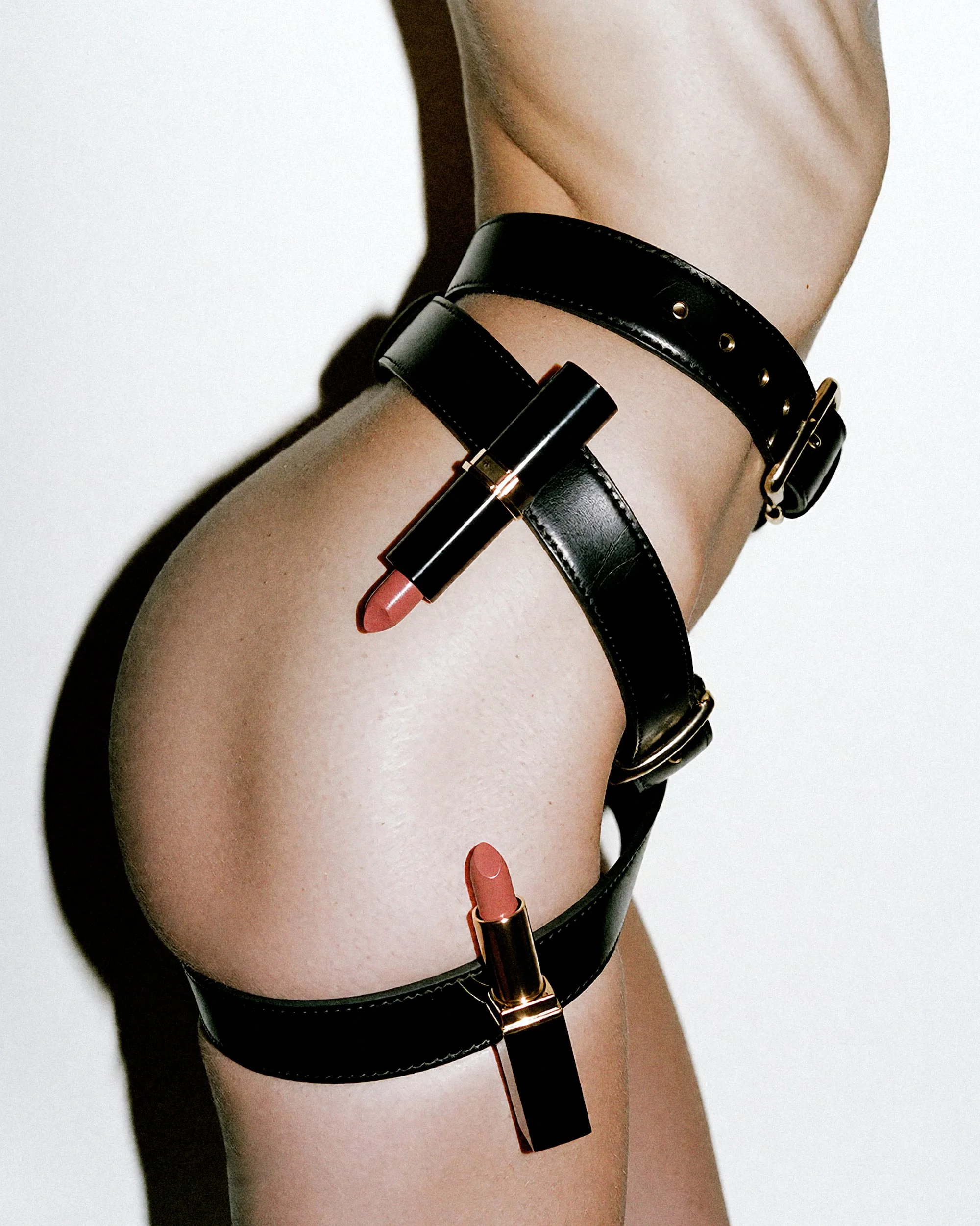
Untitled, labelled sensitive on X
Why is my art flagged as sensitive on X?
My work is provocative by design. It plays with fashion, desire, power and glamour. When a piece includes nudity, I label it myself, as X's rules ask. But much of my work has none, and it gets labelled sensitive anyway. My account isn't set to mark my media as sensitive, and no one has explained the labels to me.
The numbers speak for themselves. Before October 14, 2026, my posts on X averaged about 18,000 views each. After that date, they averaged about 1000. Same work, same 34,000 followers, a drop of more than 90 percent. As far as I can tell, automated review is judging the mood of an image rather than what's actually in it. In a sterilized world, a look or a pose is enough.
Should AI art be censored when the people aren't real?
My newest work goes a step further. I use my own proprietary AI model to make digital imprints: unique images that look like photographs but aren't. The women in them don't exist. No one posed, no one was photographed, no one was exposed.
That raises a question I think every artist and collector should sit with. Censorship is usually justified as protecting real people. But when no real person is in the picture, who is being protected? If an image of someone who doesn't exist still gets flagged, the target isn't harm. It's the idea itself: beauty, desire and ambition that refuse to be sanded down. To be clear, I'm not talking about AI imagery that depicts violence or involves minors in any way. I'm talking about adults and fashion imagery, no different from the work Helmut Newton or Ellen von Unwerth made and were celebrated for, now hanging in museums and selling at auction.
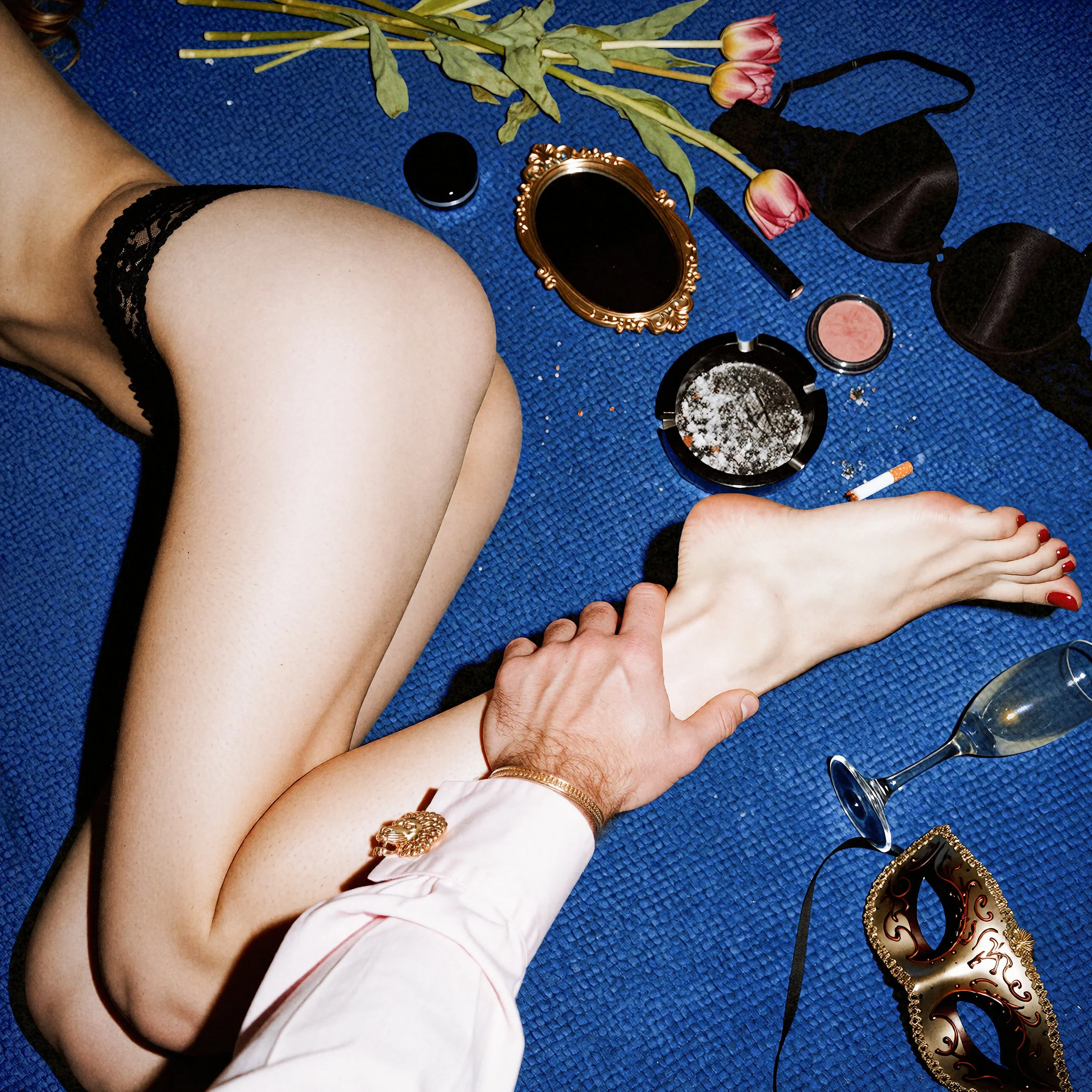
Untittle, 2026
Where does provocative art belong now?
On a wall, not in a feed. Social platforms can change the rules overnight, so I treat them as a doorway, not a home. My work lives sumultaneously in digital form and physical museum-grade, archival and made to be appreciated, whether it began as a photograph, a collage or an image from my own AI model.
I believe this work will be a timestamp. It is proof that, even in a sterilized era, someone kept making images worth dreaming about, and against the spell of political correctness that has hypnotized a large segment of society, and even those well engrained within the art industry. If you want to see it the way it was meant to be seen, explore my work or get in touch.