
How to Tell an AI Image From a Real Photograph
The short answer is to look for perfection, check the hair and skin, read the text in the image, and ask how it was made. Then understand that every one of these tells is temporary, and the only reliable test left is honesty.
I should say up front where I stand. I'm a photographer. I spent the better part of a year training and iterating a custom model on my own work, to produce imagery with the same DNA as my photographs. I like the possibilities of this technology, and I view it as another tool, no different than the camera, an instrument we can use to convey what our mind's eye sees. I can see a future where it replaces some forms of photography, though not all of it. So this is not an essay against AI imagery. It's an essay against lying about it, written by someone who makes both and knows exactly where the line sits.
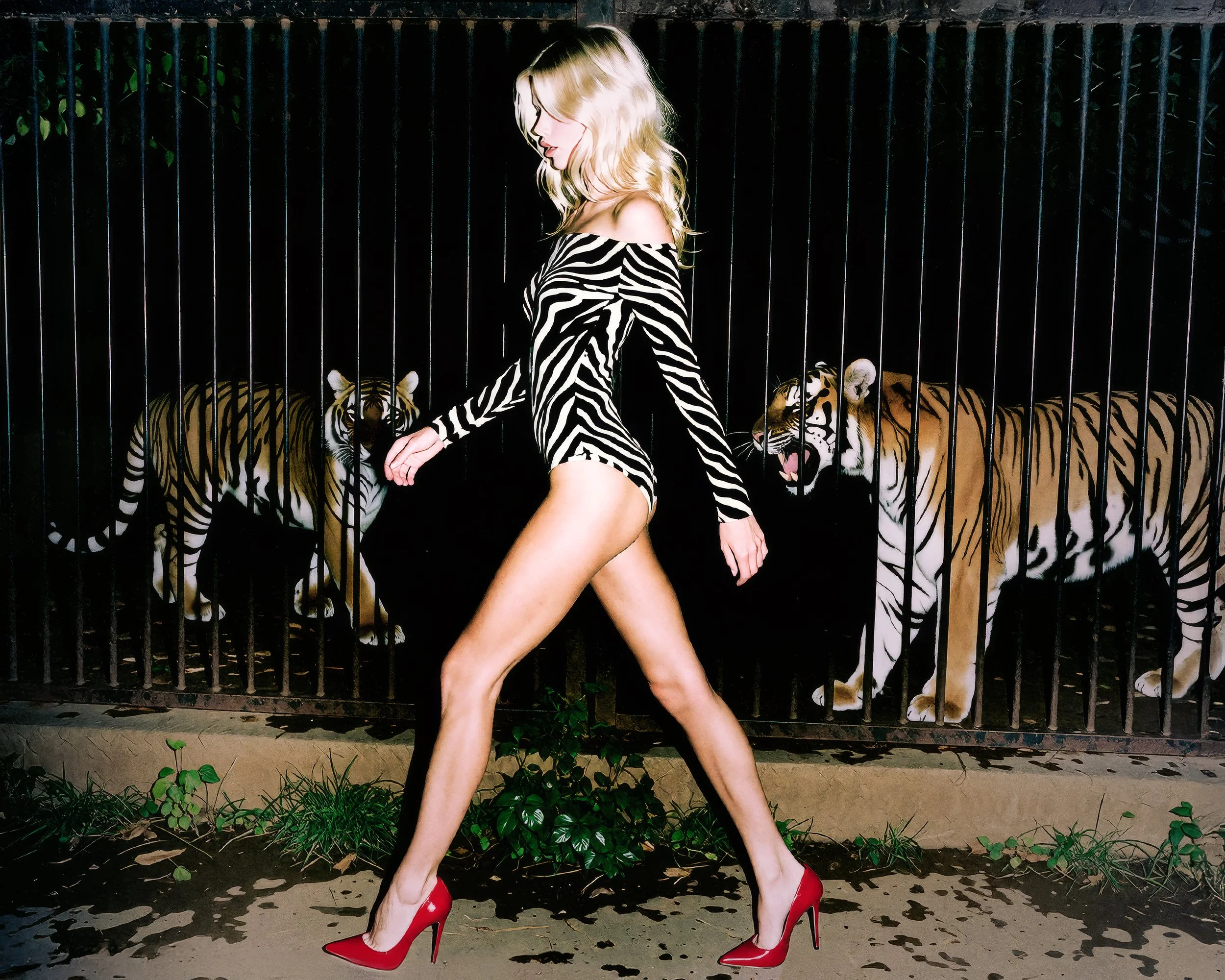
Digital imprint x Guido Di Salle
Start with perfection. Not the kind where things look right, the kind where they look eerily perfect. A real photograph has friction and tension in it. A stray hair, a shadow that falls awkwardly, a seam that doesn't sit flush. AI output tends toward a smoothness the real world never produces, and toward too much symmetry. Nature doesn't love symmetry. AI does. When a "photograph" feels airless, like nothing in it ever resisted the camera, that's your first flag.
Then look closely at hair and skin. Texture is still difficult for AI models to render perfectly. Hair can melt into itself where strands should cross. Skin can read like it was poured rather than lived in. Eyes look soulless. I'll be honest about the timeline, though. The gap is closing fast. I work with these models every day, and my prediction is that within months these tells will be gone entirely.
The clumsier signs are still worth knowing. Text and labels inside an image often come out janky, letters that almost spell something. Ears and teeth go subtly wrong. Again, closing fast. Any guide that promises you a permanent visual checklist is selling you comfort, not knowledge.
Which brings us to the test that actually holds. Ask how it was made. An artist proud of their work will tell you. Some AI imagery is a prompt sent straight from the model to the viewer, and it usually looks like it. More sophisticated work takes hours of editing in Photoshop, building, correcting, reassembling, no different from a photograph and sometimes more time consuming. Someone passing an AI image off as a photograph can't walk you through any of that, and the conversation gets vague exactly where it should get specific. Vagueness about process is the one tell that will never be patched out of any model.
A word on labels, because this is where people get confused about what honesty requires. I don't stamp an AI disclaimer on every image I post, and I think doing so is pointless. Art is meant to be visually enjoyed, and you don't need to know how something was made to see it and like it. But if someone asks, I answer. And if someone calls one of these works a photograph, I correct them, because it isn't one. It's a digital imprint, and this distinction matters to me. That's the difference in practice. I never need you to believe something false. A fraud does.
Because the real dividing line was never AI versus photography. Just like there are more bad photographs than good ones, AI is no different. Most of it is poor, some of it is remarkable, and the medium deserves neither panic nor worship. The line that matters is honest versus disguised. An artist tells you what you're looking at the moment it counts, when you ask and when you buy. A fraud needs you never to ask.
I make photographs, I make digital imprints,and everything in between and the label on the back says which is which. Ask any seller for the same. The good ones will show you everything.
guido-di-salle-digital-imprint-archival-pigment-print-color-proof